
Contact us
Free · We reply within 15 minutes
Danh mục
More
Contact us
Free · We reply within 15 minutes
Vietnamese Festivals
Updated August 2026 · By the LongDenViet workshop, Ho Chi Minh City
Ask a Vietnamese child what Tet Trung Thu means and the answer is rarely about the moon. It is about the lantern in their hand, a slice of moon cake, and a lion dance clattering down the street after dark.
In Vietnam the Mid-Autumn Festival in 2026 falls on 25 September — the fifteenth day of the eighth lunar month, when the moon is at its fullest and roundest. This guide covers the date, what the festival actually means here, the lanterns families buy for it, how it differs from moon-viewing customs elsewhere, and how to get a lantern whether you live in Vietnam or are ordering from abroad.
None of the prices, dates or product names below are invented. They come from the same catalogue our workshop builds from, and the two festival dates are calculated from the lunar calendar rather than guessed at from memory.
The date moves every year because it follows the lunar calendar, not the Gregorian one.
Mid-Autumn Festival 2026 falls on Friday, 25 September 2026 — the 15th day of the 8th lunar month, the night the moon is fullest and closest to earth for the year. In Hoi An, the closest full-moon lantern festival to that date lands on 24 September 2026 (the 14th day of the lunar month), when the old town switches off its electric lights and glows on lanterns and candlelight alone.
Mid-Autumn Festival 2027 falls on 15 September 2027. If you are planning a trip or a bulk lantern order around the festival, both dates are worth marking now rather than working them out from a lunar calendar app later. The gap between the two years — ten days earlier in 2027 than in 2026 — is normal for a lunar-calendar holiday and catches first-time visitors out more often than you would expect.
Quick reference
Mid-Autumn Festival 2026: 25 September 2026. Mid-Autumn Festival 2027: 15 September 2027. Hoi An's monthly full-moon lantern festival always falls on the 14th day of the lunar month.
One detail that trips up shoppers ordering from abroad: the festival date and the Hoi An lantern night are not the same event. The festival itself is a household and street celebration held across the whole country; Hoi An's full-moon night is a separate, monthly occurrence that simply happens to land the evening before the festival in 2026. If you are travelling specifically to see Hoi An lit by lanterns rather than electricity, the 24th is the date to be there for, not the 25th.
The moon matters, but in Vietnam this holiday belongs mostly to kids.
Mid-Autumn Festival is shared across East Asia, and the underlying idea is old and simple: the harvest is in, the moon is full, families gather. In Vietnam, though, the day has taken on a second name almost everyone uses instead — Tet Trung Thu, sometimes translated as the children's festival.
Streets fill with paper lanterns after sunset. Lion dance troupes, often made up of teenagers from the neighbourhood, move house to house with drums and a lion head, collecting small tips. Moon cakes — dense pastries filled with lotus seed paste, salted egg yolk or mung bean — are exchanged between relatives, colleagues and neighbours in the weeks leading up to the festival, not just eaten on the night itself. Parents buy or make lanterns for their children, and after dinner the kids carry them out into the street to join a loose, informal procession that has no fixed route and needs none.
None of this is temple ritual or solemn ceremony. It reads more like a community-wide evening out for children, built around light, sugar and noise. Ask an adult in Vietnam what they remember about Trung Thu as a kid and the answer is almost always about the lantern they carried, not the moon itself — which is the clearest sign of where the festival's emotional centre actually sits here.
The moon-cake exchange runs on its own quiet etiquette. A box given to a boss, a landlord or a business partner is a small gesture of respect that costs relatively little and says a great deal; the same box shared between neighbours is closer to a seasonal check-in than a formal gift. Companies in Vietnam routinely send branded moon-cake boxes to clients in the weeks before the festival, which is one reason bakeries sell out of their better packaging designs well before the date itself.
The street scene on the night itself is worth describing for anyone who has not seen it. In residential neighbourhoods, families set out folding chairs on the pavement in front of their homes rather than staying indoors, watching the informal procession of lantern-carrying kids pass by while adults chat over tea. Shops selling lanterns and moon cakes stay open late for weeks beforehand, their storefronts strung with paper lanterns of every shape, and the busiest of these streets — Hang Ma in Hanoi's Old Quarter is the best-known example — turn into a walk-through market purely for the festival, closed to cars and packed with families browsing lanterns days ahead of the date itself.
A harvest festival first, a children's festival second — the second layer is the newer, distinctly Vietnamese one.
The broad outline is shared across East and Southeast Asia: an agrarian calendar built around the harvest, a night when the moon is at its fullest and brightest, and a custom of families gathering to mark the turn of the season together. That much is common ground, not something unique to Vietnam.
What sets the Vietnamese version apart is how firmly the day has been reframed around children over the generations. Rather than staying a formal moon-worship observance, Trung Thu evolved into a festival built for kids specifically — the lanterns, the lion dance, the sweets, all of it aimed at the youngest members of the household. It is telling that the phrase most Vietnamese people reach for first is "children's festival," not any term referencing the moon.
The lion dance itself is worth a word of its own. It is performed by amateur neighbourhood troupes rather than professional companies in most towns — often teenagers who rehearse for weeks beforehand, wearing a lion head made of papier-mache and coloured fabric, moving to drums and cymbals from house to house. Getting a coin or small note pressed into the lion's mouth by a delighted child is the whole transaction; nobody expects a formal fee.
The visual language of the festival leans hard on light and colour rather than solemn symbolism. Red and yellow paper lanterns, gold foil trim, and the warm glow of a keo quan spinning in a doorway all do the same job of signalling that a household is celebrating, in the same instinctive way porch decorations do elsewhere. None of it needs explaining to a child — the lanterns alone communicate that something worth staying up late for is happening tonight.
Schools generally treat the day as a half-holiday rather than a full closure, often running a class party in the afternoon with a lion dance visit and moon cake shared among the children before the evening street celebrations begin. That daytime school event and the nighttime family one are separate occasions in most families' calendars, both built around the same lanterns and the same date.
Three shapes dominate: the star, the revolving den keo quan, and cellophane animal lanterns for younger kids.
The five-pointed star lantern is the shape most associated with the festival across Vietnam — usually red and yellow paper stretched over a bamboo frame, carried on a stick, lit from inside by a small bulb or a candle where tradition still allows it. It shows up on greeting cards, shop signage and school decorations as the unofficial symbol of the whole festival, in the same way a jack-o'-lantern stands in for Halloween.
Den keo quan, literally the lantern that pulls soldiers along, works on a piece of quiet physics rather than a motor. A small heat source at the base warms the air inside a light paper or fabric drum sitting on a spindle; the rising warm air spins the drum, and painted figures — soldiers, farmers, folk-tale characters — appear to march around the lantern's surface in an endless loop. It is one of the oldest mechanical toys still made by hand in Vietnam, and children (and plenty of adults) will happily watch one turn for several minutes without getting bored.
The heat-driven versions are the more traditional build — no battery, no motor, just the physics of rising warm air, which is part of the appeal for buyers who want something that feels genuinely handmade rather than electronic. The electric-spin versions trade a little of that old-fashioned mechanism for convenience: no flame or heat source to manage around children, which matters more for a school hall full of five-year-olds than for a quiet family living room.
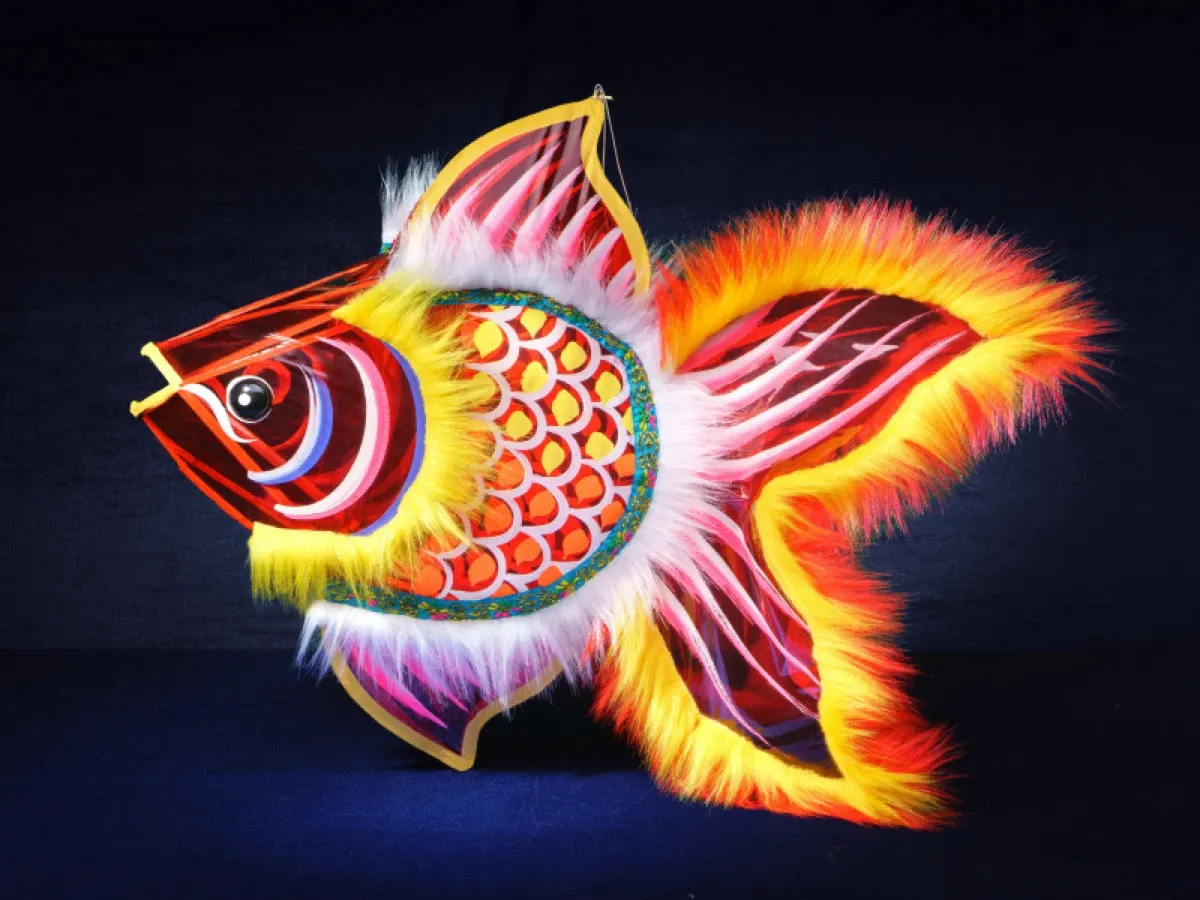
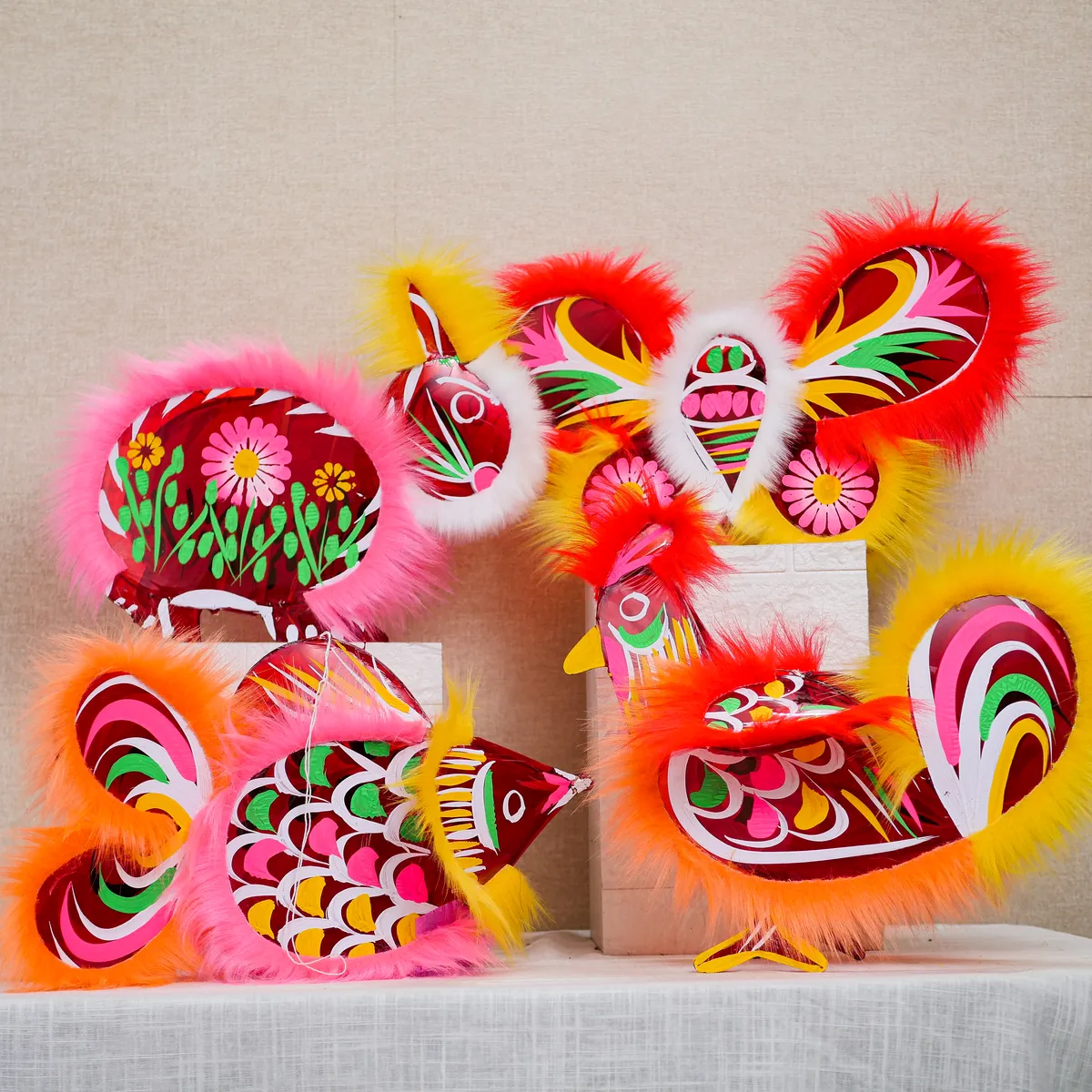
For toddlers and younger kids who cannot yet manage a candle-lit paper lantern safely, cellophane animal lanterns are the usual choice — bright, wipeable, LED-lit, shaped like rabbits, butterflies or fish, and sturdy enough for a five-year-old to swing around without tearing them. Schools and companies buying for a group of children tend to order these in sets rather than one at a time.
Individual pieces and bulk sets both come from the same workshop.
A single den keo quan makes a striking gift for a relative overseas or a centrepiece for a family gathering. Schools, kindergartens and companies running a Mid-Autumn event for staff's children usually order the cellophane animal sets, since a group of thirty or forty kids needs identical, sturdy lanterns rather than one delicate showpiece.
We build both from our workshop in Ho Chi Minh City and ship nationwide within Vietnam, plus internationally by courier for anyone celebrating abroad. Send us your quantity and the date you need them by, and we confirm what is achievable — closer to the festival, popular sizes do sell through, so ordering a few weeks ahead is worth doing rather than leaving it to the last week of September.
For a school or kindergarten event, the practical detail that matters most is consistency: thirty children with thirty slightly different lanterns looks scrappier in photos and causes more squabbling on the day than thirty identical ones. We keep a set order to the same colour batch and shape for exactly this reason, rather than filling a large order from mixed leftover stock.
The festival travels well — the lanterns are the part people miss most.
Vietnamese communities abroad keep Trung Thu going every year, usually centred on a community hall event, a temple gathering or simply a family dinner with moon cake and a lantern for the kids. What is harder to source outside Vietnam is a genuine den keo quan or a proper cellophane animal lantern rather than a generic paper lantern from a party-supply aisle.
We ship both by international courier, quoting the real cost and delivery window for your country before you commit to an order — no guessing based on a flat rate that does not actually apply to your address. If you are ordering for a community event abroad rather than a single family, the same bulk process above applies: tell us the count and the date, and we confirm what we can build and ship in time.
A den keo quan travels reasonably well by courier if it is boxed with its drum removed and packed separately, since the drum is the one part that can warp if it is jostled against the frame in transit — we pack it this way as standard rather than leaving it to chance. Cellophane animal lanterns, being lighter and largely flat-folding, ship with fewer precautions and are the easier of the two to send in volume for a community event abroad.
For a first Trung Thu away from Vietnam, the detail that tends to matter most to parents is simply getting the right lantern in front of their child on the night itself, not a week either side of it. If the festival date and your address are both fixed, telling us both up front lets us work backward from the delivery window a courier actually needs, rather than promising a date we cannot guarantee.
Den keo quan revolving lanterns and cellophane animal lanterns, made in Ho Chi Minh City and shipped nationwide.


Model
3.200.000 VND
Ask on WhatsApp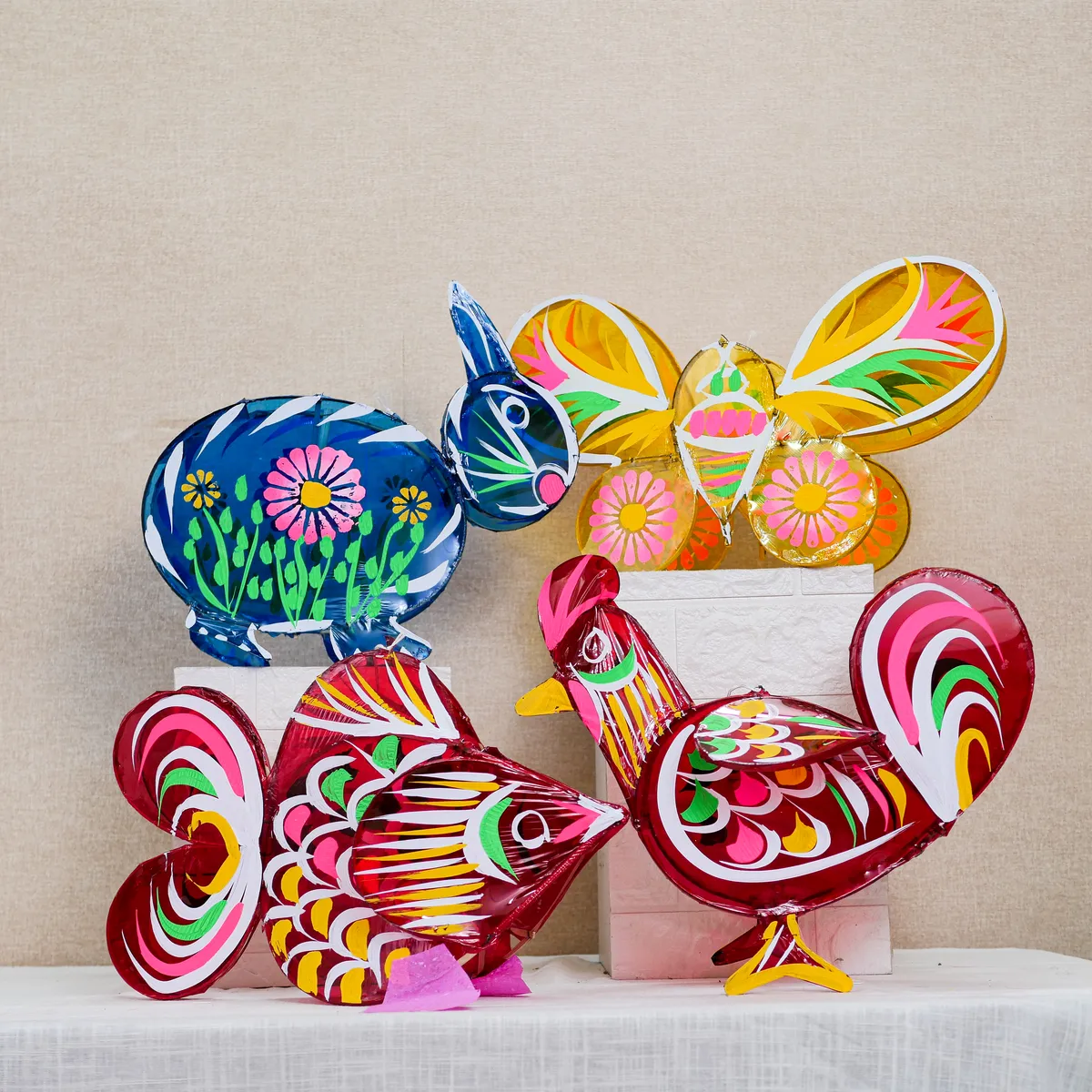
Model
1.400.000 VND
Ask on WhatsApp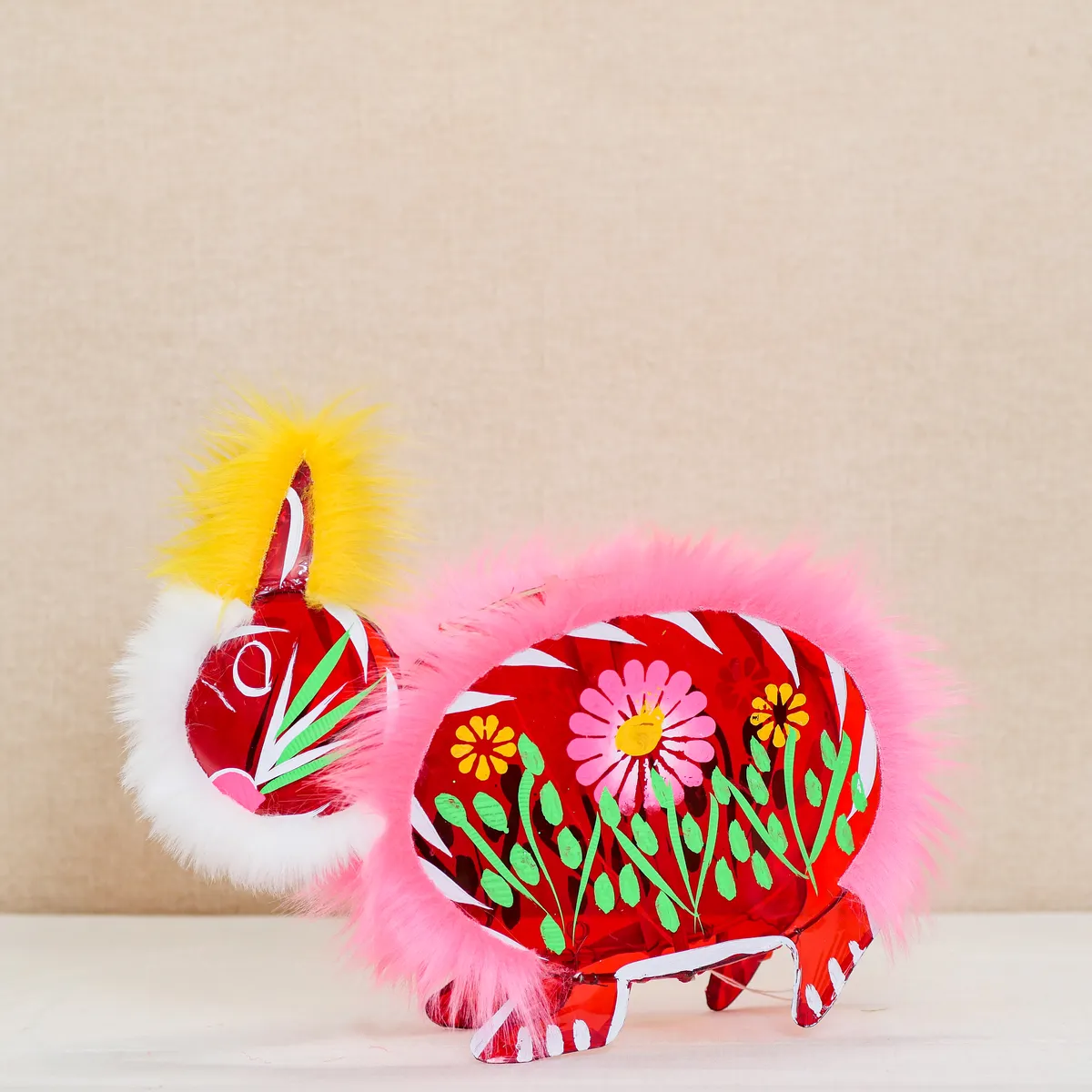
Model
800.000 VND
Ask on WhatsAppWhen is the Mid-Autumn Festival in Vietnam in 2026?
Friday, 25 September 2026 — the 15th day of the 8th lunar month. The closest full-moon lantern festival in Hoi An falls a day earlier, on 24 September 2026.
What do Vietnamese children do at Mid-Autumn?
They carry lanterns out into the street after dark, often as part of an informal neighbourhood procession, watch lion dance troupes perform house to house, and eat moon cake with family. It is widely called the children's festival in Vietnam for this reason.
What is a den keo quan?
A revolving lantern, literally translated as "lantern that pulls soldiers along." Rising heat from a small flame or bulb spins a drum inside the lantern, making painted figures appear to march around its surface in a continuous loop.
Where can I buy Mid-Autumn lanterns in Vietnam?
We make den keo quan and cellophane animal lanterns at our workshop in Ho Chi Minh City and ship nationwide. Message us on WhatsApp with the shape, size and quantity you need.
Can you ship Mid-Autumn lanterns abroad?
Yes, by international courier. Send us your address and quantity on WhatsApp and we quote the real shipping cost and timeline for your country before you order.
Is Mid-Autumn Festival the same as Chinese Mooncake Festival?
Both fall on the same lunar date and share the harvest-moon origin, but Vietnam calls its version Tet Trung Thu and has reframed the day around children rather than moon worship — the lanterns, lion dance and street procession are the parts that define it here.
What is the difference between a den keo quan and a cellophane lantern?
A den keo quan spins on rising heat and shows painted figures marching in a loop; it is bought as a single centrepiece from 550,000 to 980,000 VND. Cellophane animal lanterns have no moving parts, are LED-lit, and are bought in sets of ten or forty for a school or company event.
How far ahead should schools or companies order Mid-Autumn lanterns?
A few weeks before the festival is worth doing rather than waiting until late September, since popular shapes and colour sets do sell through closer to the date. Send us your headcount and event date and we confirm what is achievable in time.
Continue reading
Den keo quan, star lanterns and cellophane animal sets, made in our Ho Chi Minh City workshop and shipped nationwide or abroad.
Visit our showroom
262/1/93 Phan Anh, Phu Thanh Ward, Tan Phu District, Ho Chi Minh City
Air-conditioned, one-on-one help, English spoken. Open daily 8 a.m.–9 p.m.