

Contact us
Free · We reply within 15 minutes
Danh mục
More
Contact us
Free · We reply within 15 minutes
Travel Guide
Updated August 2026 · By the LongDenViet workshop, Ho Chi Minh City
The Hoi An Lantern Festival 2026 follows a ritual that has run here, in some form, for four centuries: once a month the electricity dims, shop owners swap neon for candles, streets go quiet, and the whole riverfront turns the colour of warm silk.
This guide covers every 2026 festival date, what to expect when you show up, the story behind the tradition, and practical advice for making the most of the night. Visiting, photographing, or just deciding if it is worth planning your itinerary around it — start here.
The festival falls on the 14th day of each lunar month — the eve of the full moon. These are the confirmed 2026 dates for every monthly celebration.
Hoi An holds its Lantern Festival every month without exception, year-round. It runs roughly from 6:00 p.m. to 10:00 p.m. on the 14th day of the lunar calendar. Because the lunar month is slightly shorter than the solar one, 2026 actually has thirteen festival nights — April gets two. The table below lists every occasion.
Already planning early 2027?
The first festival nights of 2027 fall on 21 January, 19 February (the first full moon after Tet 2027, which lands on 6 February — expect the biggest crowds of that year) and 21 March.
Mark 2 March 2026 in your calendar
The March festival is the largest of the year. It falls on the first full moon after Tet (Lunar New Year falls on 17 February 2026), so the town is still in a celebratory mood and the crowds — and the atmosphere — are at their peak.
Every monthly event is worth attending, but if your trip can flex even a day or two, timing it to one of these evenings transforms the visit. The old town is always charming; on festival night it is something else entirely.
From 6 p.m. the old town runs on candlelight and silk.
As evening approaches, shop owners start switching off their electric lights. By 6 p.m. the entire Ancient Town — the yellow-walled streets, the covered Japanese Bridge, the riverside promenade — is lit only by lanterns. Thousands of them: hung from eaves, strung across narrow lanes, carried by hand, floated on the Thu Bon River.
The river is the heart of it. Local families and tourists buy small paper lanterns — each one holds a tea light — from women selling them from low wooden boats along the bank. You light the candle, make a wish, and set the lantern on the water. The current carries it out, a slow drift of small flames moving downstream in the dark.
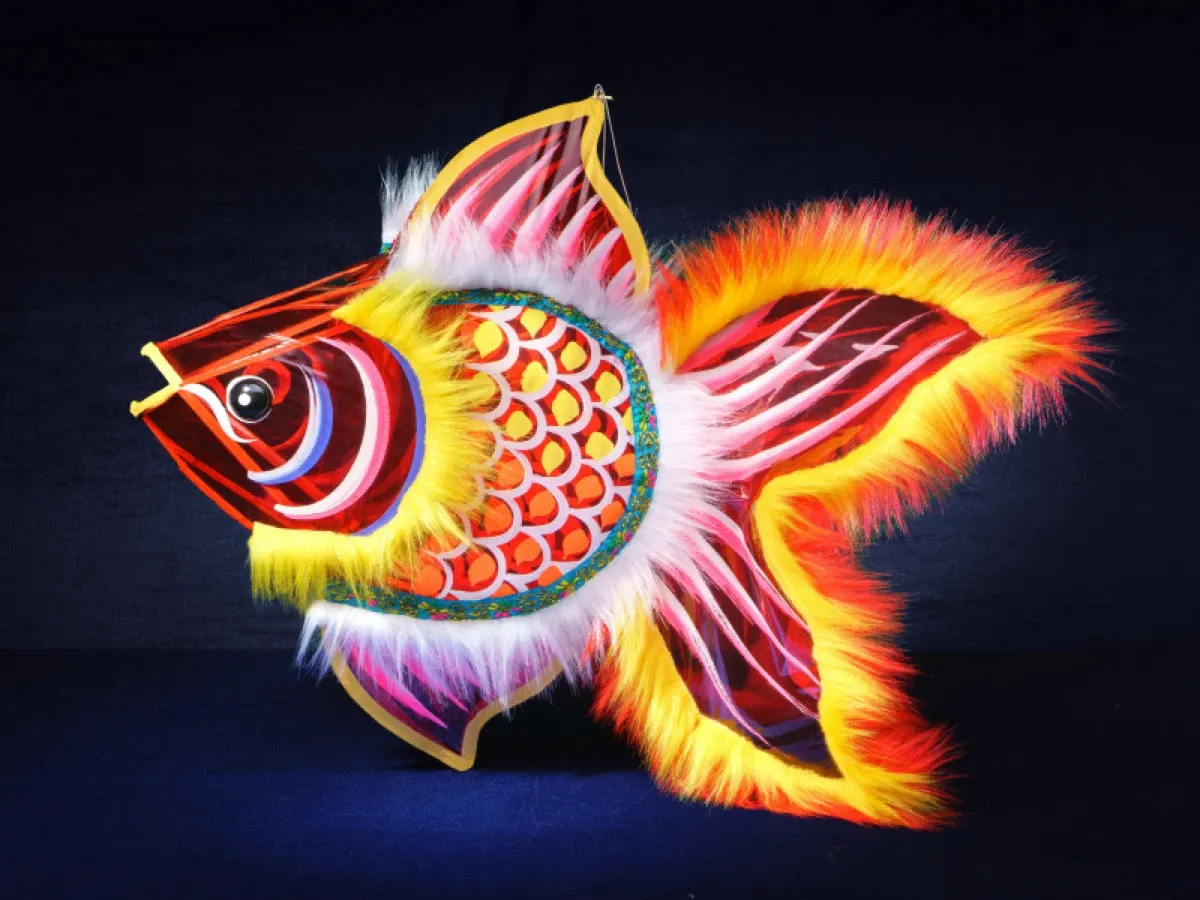
Along the streets there is folk music: traditional Vietnamese instruments, local choirs, sometimes a dance performance in one of the open courtyards. Games and food stalls set up near the bridge. Children run with handheld lanterns shaped like fish and stars.
The whole thing wraps up by around 10 p.m. when the electric lights flick back on. Arriving before sunset — say around 5:30 p.m. — lets you watch the transition from ordinary evening to candlelit festival, which is itself worth seeing.
The rowing boats on the Thu Bon River run every evening — festival nights are simply the most magical time to go.
The boat ride is the other half of the Hoi An lantern experience. Small wooden rowing boats, most of them handled by local women, carry passengers out onto the Thu Bon River after dark. From the water you see the old town the way it was meant to be seen: the lantern-strung facades reflected in the river, and on festival nights, dozens of small candle-lit paper lanterns drifting past the hull.
Is it worth it? On an ordinary evening, it is a pleasant, quiet ride. On a festival night, with the electric lights off and the river full of drifting flames, it is the single best vantage point in Hoi An — the view the photographers queue for, without the queue.
Four centuries of full-moon ritual, from Chinese trading ships to UNESCO status.
The full-moon festival in Hoi An grew out of two overlapping traditions. One is Buddhist: the 15th day of each lunar month (the full moon itself, though the festival here is on the eve, the 14th) is considered an auspicious day for prayer, ancestor worship and acts of merit. Lighting a candle or floating a lantern on the river is an offering — for the health of the family, for fortune in the coming month, for the souls of those who have passed.
The other root is commercial. From roughly the 1600s, Hoi An was one of Southeast Asia's busiest trading ports. Chinese merchants and Japanese traders settled here in their own quarters, each community maintaining the rituals of home. The practice of setting candle-lit paper boats and lanterns on the river on full-moon nights was among them. Over generations the two streams merged into a single local observance.
Hoi An was declared a UNESCO World Heritage Site in 1999, partly because this layered cultural heritage — the architecture, the trade history, the living rituals — survived almost intact. The Lantern Festival is one of the clearest expressions of that continuity. The lanterns hanging over Tran Phu Street today are made by the same methods, with the same bamboo-and-silk construction, as those that lit the port four hundred years ago.
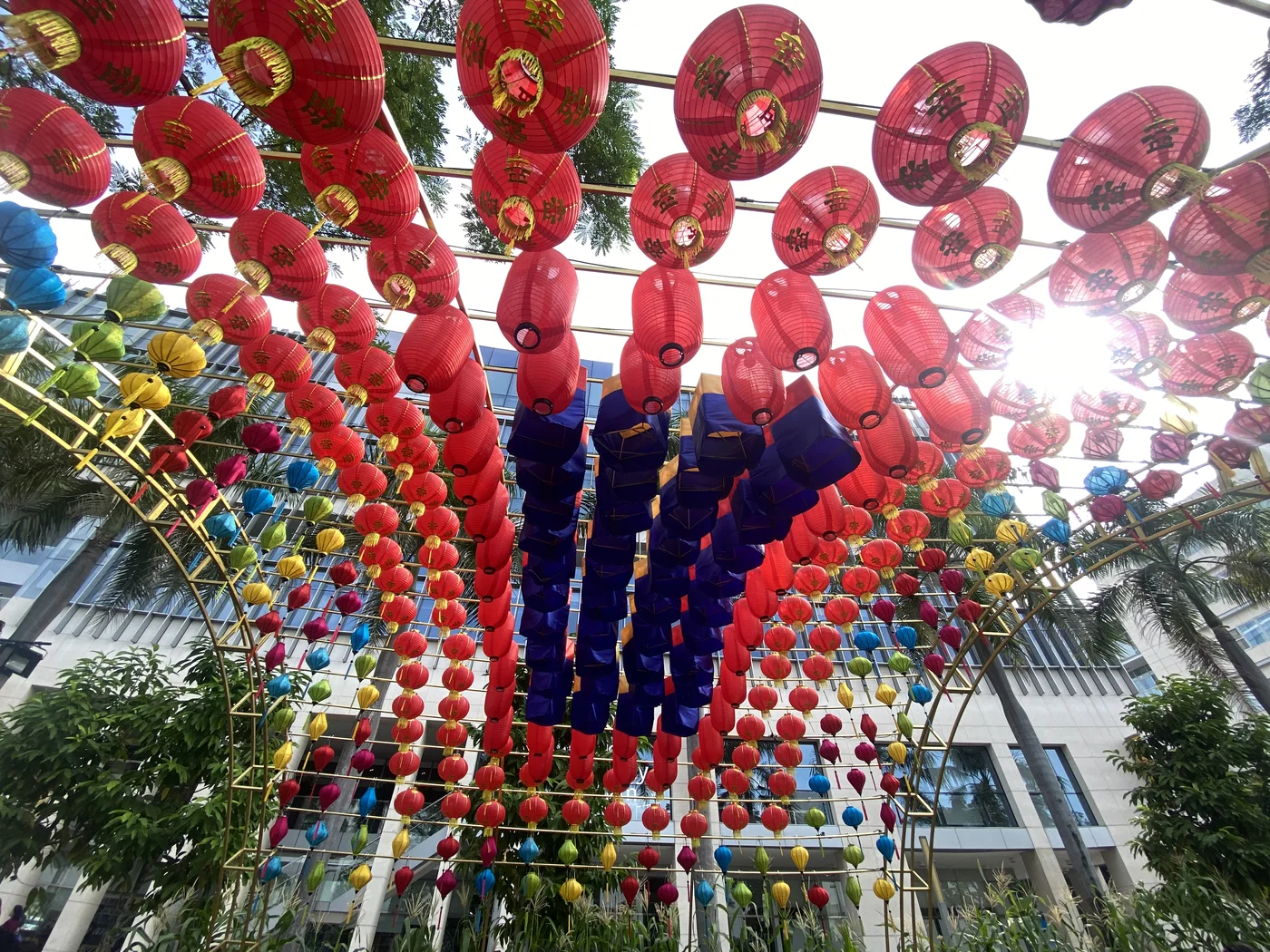
Red is the most common colour: a wish for luck and prosperity. Yellow, the colour of Hoi An itself (the old buildings are painted that specific warm ochre), represents royalty and good fortune. Blue suggests the river, calm and steady progress. A round shape reads as wholeness and family unity. A fish shape — very common at festivals — symbolises abundance. These are not rigid rules, but understanding them changes how you look at the streets.
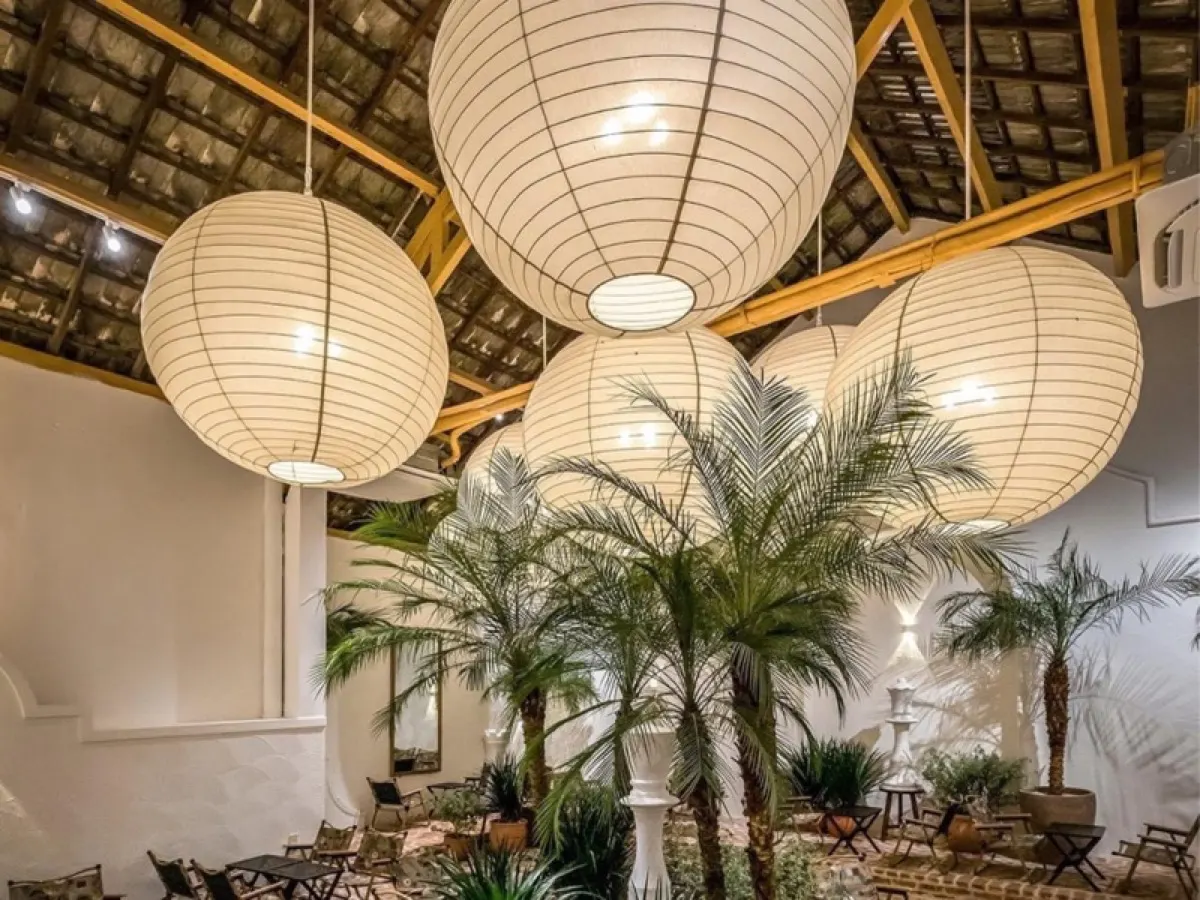
Shape carries meaning too, though more loosely than colour. Round lanterns are the most traditional silhouette and the one most families keep at home year-round; the more angular banh u and diamond shapes turned up later as decorative variations, largely for visual interest rather than symbolism. Here is the fuller shape set you will spot strung across the old town on any given night, festival or not.
Practical advice for making the most of the night.
Check whether the old town ticket is required for the evening you plan to visit — entry to the Hoi An Ancient Town heritage zone may need an admission ticket depending on how you enter and which attractions you access. The ticket situation can change seasonally, so confirm locally when you arrive.
The whole point of the festival is that the light is low. That is great for atmosphere; it is harder for cameras. A few things help. If you are shooting on a phone, tap the brightest lantern in the frame to set exposure — the phone will open the sensor wide and everything glows rather than going black. On a dedicated camera, a wide aperture (f/1.8 or f/2.8), ISO around 800–1600, and a shutter speed of at least 1/60s for handheld shots keeps things sharp. A small gorilla pod or just bracing against a wall makes a real difference. Avoid flash — it kills the candlelit quality and annoys people around you.
The river lantern floats make for the best long-exposure shots: 3–5 seconds on a steady surface gives you trails of warm light on moving water. You do not need elaborate gear — a phone propped on a railing and the timer set to avoid camera shake does the same thing.
On the bigger nights
The March festival draws the largest crowds of the year — it falls just after Tet and the town is still in a celebratory mood. The September festival is also very busy, as it falls close to the Mid-Autumn season. Expect the streets to be genuinely packed by 7 p.m. on those nights. If you dislike crowds, a quieter month like July or November gives you the full experience with far more room to breathe.
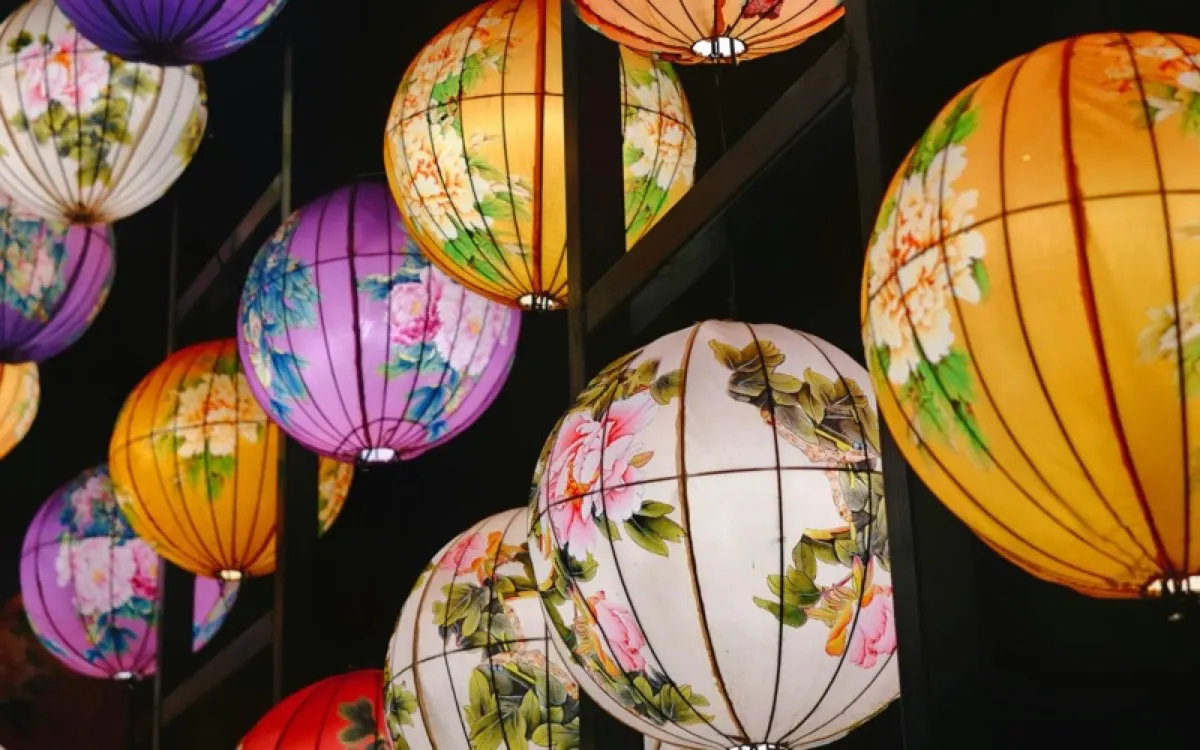
The silk lanterns strung over Tran Phu Street are the same handmade pieces we make in our Ho Chi Minh City workshop.
The lanterns you see in Hoi An are not decorations manufactured somewhere for tourist sale. They are the product of a craft tradition: aged bamboo bent and lashed into shape, real silk pulled over the frame, dip-dyed in colours that have centuries of symbolic weight behind them. The same construction method, the same materials.
We are LongDenViet, a lantern workshop based in Ho Chi Minh City, making traditional Vietnamese lanterns since 2016. Eight shapes, fourteen colours, sizes from 10 cm to over a metre — the full range is on our English page. Every lantern is made to fold flat, so it packs in a suitcase or ships economically anywhere in the world via DHL or FedEx.
If you fell for the atmosphere of the festival and want that same warm glow at home — over a dining table, in a garden, strung across a terrace — this is the most direct route. Message us on WhatsApp or email with what you have in mind and we will suggest the right size and colour.
Visiting Hoi An for the festival? You can also make your own silk lantern in a hands-on Hoi An lantern-making class — the perfect thing to do before the streets light up at night.
The handmade silk lanterns strung over Hoi An are the same ones we make and ship worldwide — pick your shapes and colours below.


When is the next Hoi An lantern festival in 2026?
The festival happens every month on the 14th day of the lunar calendar. The remaining 2026 dates are: 26 August, 24 September, 23 October, 22 November, and 22 December. The first festivals of 2027 fall on 21 January and 19 February. The biggest celebration of 2026 was 2 March, the first full moon after Tet.
Do I need to book the Hoi An lantern boat ride in advance?
No. Tickets are sold on the evening at the official booths along the Thu Bon riverbank in the centre of town, and boats run every night of the year. On festival nights the queue grows quickly after 7 p.m., so arriving at dusk — around 5:30 to 6 p.m. — gets you a shorter wait and the best light for photographs.
Is the Hoi An Lantern Festival free to attend?
The festival atmosphere — the lit streets, the riverside, the music — is free to walk through. Entry to specific heritage sites within the Hoi An Ancient Town may require an admission ticket depending on which attractions you access. Check locally when you arrive, as the ticketing arrangements can vary. Floating paper lanterns on the river are sold by vendors on the bank for a small fee.
Can I release a lantern on the river in Hoi An?
Yes. Small paper lanterns with tea lights are sold by women in wooden boats along the south bank of the Thu Bon River during the festival. You buy one, light the candle inside, and set it on the water. The current carries it downstream. It is one of the most memorable things you can do in Hoi An.
What is the biggest lantern festival in Hoi An in 2026?
The largest event of the year is the March festival, which fell on 2 March 2026. It coincides with the first full moon after Lunar New Year (Tet, 17 February 2026), so the town is still in a festive mood and the celebration draws its biggest crowds and most elaborate decorations. After that, the September festival — near the Mid-Autumn Festival season — is also notably larger than the other monthly events.
Are the lanterns in Hoi An lit every night?
Yes. Silk lanterns hang lit over the streets, bridges and riverfront of the Ancient Town every night of the year — this is normal evening lighting, not something reserved for a special date. What is monthly, not nightly, is the full lantern festival itself: on the 14th day of each lunar month, shops switch off their electric lights and run on candlelight and lanterns only, from roughly 6 p.m. to 10 p.m.
What time is the lantern boat ride in Hoi An?
Boats run on the Thu Bon River every evening after dark, not only on festival nights. Going at dusk — around 5:30 to 6 p.m. — gets you the boats before the queue builds, along with good light for photos. After 7 p.m., especially on a festival night, waits at the boarding points grow considerably longer.
Where do you buy tickets for the Hoi An lantern boat?
At the official ticket booths along the riverbank in the centre of town, near the An Hoi bridge area. Prices are posted at the booth itself. Buying there rather than from touts on the street avoids the tourist mark-up some visitors get quoted.
What is the best time to see the Hoi An lanterns?
For nightly atmosphere, any evening after dark works — the lanterns are lit year-round. For the full festival experience with electric lights off and the streets running on candlelight alone, time your visit to the 14th day of the lunar month. If you prefer fewer crowds, a quieter month like July or November gives the same atmosphere with more room to move; March and September draw the biggest numbers.
Continue reading
The same bamboo-and-silk lanterns that light up Hoi An's streets on full-moon nights — made by hand in our Ho Chi Minh City workshop, in eight shapes and fourteen colours, shipped flat-packed worldwide.
Visit our showroom
262/1/93 Phan Anh, Phu Thanh Ward, Tan Phu District, Ho Chi Minh City
Air-conditioned, one-on-one help, English spoken. Open daily 8 a.m.–9 p.m.