

Contact us
Free · We reply within 15 minutes
Danh mục
More
Contact us
Free · We reply within 15 minutes
Hospitality & Design
Updated August 2026 · By the LongDenViet workshop, Ho Chi Minh City
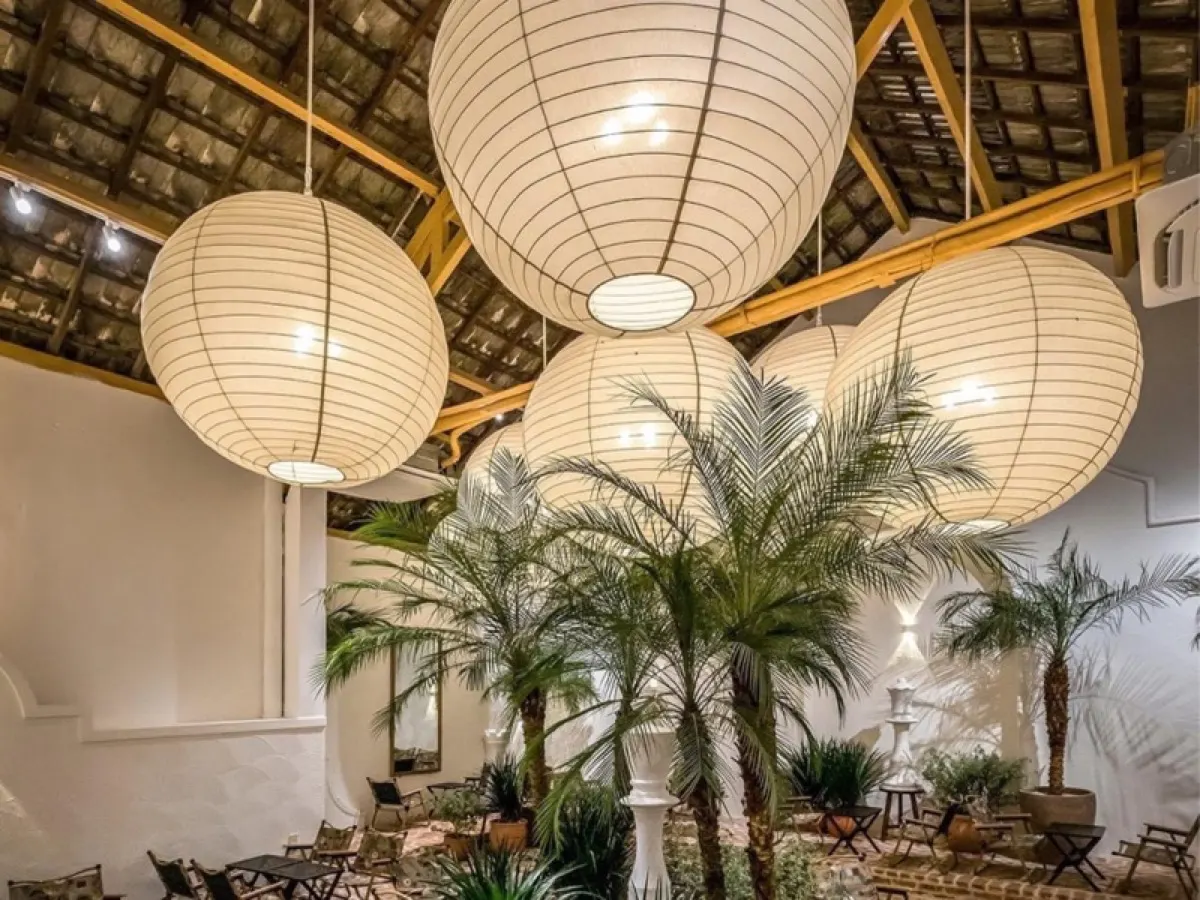
Walk into any restaurant that gets its lighting right, and you will notice the light before you notice the menu. Lanterns for restaurants and cafes do that work quietly — warm, diffused, nothing like the flat glare of a downlight grid.
This guide covers why silk lanterns suit food-and-beverage spaces specifically, how to lay them out by room type, sizing against your ceiling, which bulbs are actually safe to use inside one, the indoor-versus-outdoor question, and what wholesale ordering looks like if you are fitting out more than a handful of tables.
Every price and size figure below is the same one our workshop quotes fit-out clients from — nothing here is rounded for a tidier sentence.
The light quality matters more than the shape.
A bare bulb is harsh. A silk shade softens and scatters that same light into something closer to candlelight — warm, low-glare, flattering to food and to faces. That is the entire case for hanging fabric lanterns in a dining room: the light itself does more work than any wall decoration could.
There is also a cost angle worth being honest about. Imported decorative fixtures — blown glass, branded pendant lamps — carry a price tag that reflects shipping and brand markup as much as material. A handmade bamboo-and-silk lantern gives a comparable warm-light effect at a lower unit cost, which matters when you are lighting forty tables rather than four.
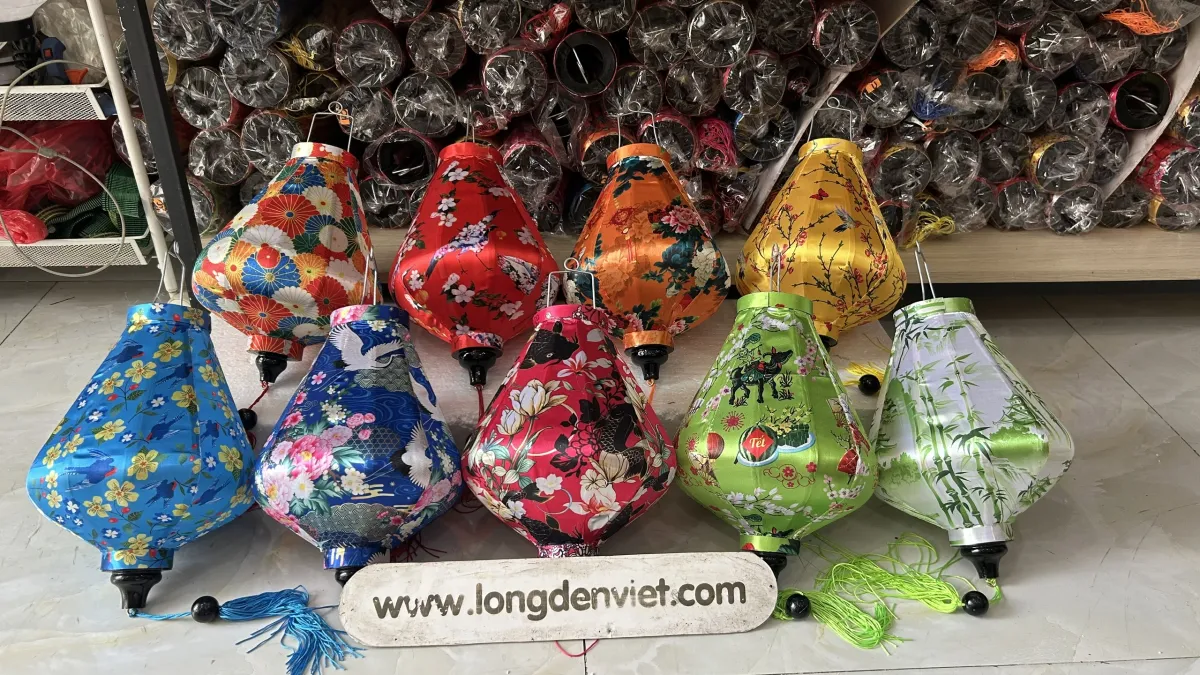
Shape and colour also do quiet branding work that a plain downlight never can. A cafe running amber and terracotta shades reads differently to guests than one running deep green and gold, even before either serves a single cup of coffee. Restaurateurs opening a second location often pick a slightly different colour set from the first specifically so the two venues photograph as related but distinct, rather than identical copies of the same room.
The other advantage is that a lantern is not a fixed fixture. It ships flat, hangs from a simple hook or cord, and can be repositioned, swapped for a new colour for a seasonal refresh, or scaled up when you open a second location — none of which is true of a built-in ceiling fitting.
One more practical point worth raising with any owner comparing the two: a silk lantern that gets bumped, faded or damaged is a low-cost, fast replacement from stock. A damaged imported pendant fixture is usually a special order with a lead time measured in weeks, sometimes from overseas — which matters the first time a delivery trolley clips one during service.
There is also a simple sourcing argument that comes up in almost every fit-out conversation: buying direct from the workshop that makes the lantern removes at least one layer of markup that a decor supplier or interior fit-out contractor would otherwise add. That gap widens with quantity — the saving on forty lanterns for a full dining room is meaningfully larger than on four for a single corner, which is exactly why hotels and restaurant groups tend to order this way rather than through a third-party decor vendor.
A dining room, a hallway and a garden terrace each want a different rhythm.
The single biggest layout mistake is spacing lanterns in a rigid grid, which flattens the effect into something closer to office lighting. Restaurants and cafes read better with clusters and variation.
Staggering the drop height by even 10-15 cm between lanterns in a cluster is the detail that separates a considered installation from a row of identical bulbs hung at one height. It costs nothing extra and reads far better in photographs, which matters for any venue that expects guests to post about the space.
The size table below is the same one our workshop prices from — use it to plan before you order.
Plain silk lanterns in the round, inverted-garlic, banh-u, diamond and custard-apple shapes share one size-based price table. As a rough rule: the higher the ceiling, the larger the lantern can go without looking lost in the space.
Flying-saucer and umbrella shapes cost a little more for the extra folding: the disc shape runs from 120,000 VND at 30 cm to 270,000 VND at 60 cm, and the umbrella shape from 140,000 VND at 30 cm to 320,000 VND at 60 cm. Hand-painted pieces sit above that again, from 160,000 VND at 30 cm up to 1,800,000 VND at a full metre, since each one is painted rather than printed.
Ceiling height is the constraint most fit-out plans underestimate. A 60 cm lantern reads as generously large in a photograph but needs a genuine 3 metres or more of clearance to hang without a guest's head passing close beneath it; a standard 2.6-2.8 metre dining room ceiling is better served by the 35-45 cm range even if the room itself feels spacious. Measuring the actual clear height under any beam, duct or ceiling fan before ordering avoids the common mistake of ordering the size that looked right in a supplier's photo rather than the size that fits the room.
Not sure which size fits your room?
Send us a photo of the space and the ceiling height on WhatsApp and we will suggest a size and layout before you commit to an order.
The bulb matters as much as the shade — the wrong one shortens a silk lantern's life fast.
A restaurant fit-out often inherits whatever bulbs the electrician had on the van, which is exactly the wrong way to choose one for a silk shade. Heat is the enemy of silk and bamboo, not light output, so the choice comes down to temperature rather than brightness.
For a dining room specifically, a warm-white LED in the 2,700-3,000K range reads closest to candlelight and suits food photography far better than a cooler daylight bulb. Dimmable LED drivers are worth specifying at the fit-out stage if the room needs to shift mood between lunch service and evening — brighter and cooler for lunch, dimmer and warmer once the evening crowd arrives.
Wiring is worth planning at the same time as the lantern order rather than as an afterthought. A pendant cord run to a ceiling rose or junction box looks intentional; a bulb dangling from an exposed cable does not, however good the shade above it is. For a cluster of several lanterns on one circuit, a qualified electrician should confirm the load before installation — LED fixtures draw little enough that this is rarely a real constraint, but it is worth confirming rather than assuming on a large installation.
Silk is a fair-weather material — plan the frame accordingly.
Standard silk lanterns belong indoors, or under a solid roof — a terrace with a proper awning or pergola is fine, direct rain exposure is not. Silk fades under prolonged strong sun and the bamboo rings soften if they get repeatedly wet.
For a genuinely open-air garden or rooftop, our workshop makes an outdoor version with an iron powder-coated frame and a tighter-weave fabric built to handle humidity and weather — ask for that spec when ordering for anywhere without cover.
A halfway case worth flagging: a terrace that is covered but open on the sides, common in coastal venues, still gets enough blown rain and salt air over a season to shorten a standard silk lantern's life. If the terrace catches wind off open water at any point, order the outdoor spec even under a solid roof.
Wind is the other outdoor factor worth planning around, separate from rain. A lantern hung loosely by a single cord will spin and knock against a wall or a neighbouring lantern in any real breeze, which looks messy and shortens the fabric's life at the contact point. A short second tether, or hanging from a slightly rigid arm rather than a free-swinging cord, keeps an outdoor cluster still enough to photograph well on a normal breezy evening.
Rooftop bars and open terraces near the coast see the fastest fading of any installation type, simply from the combination of direct sun and salt-laden air working on the fabric at the same time. If a venue sits in that category, the outdoor iron-frame, tighter-weave spec is worth ordering from day one rather than starting with the standard indoor build and finding out within a season that it needs replacing early.
A lantern wall does not fail all at once — plan for spares, not a full re-order.
Dust with a dry cloth or a feather duster; never wipe silk with a damp one, water leaves marks and softens the bamboo rings. Kept out of direct sun and away from rain, a lantern holds its colour and shape for years of daily service.
When one piece in a cluster does eventually fade or get knocked, the practical approach is to keep two or three spares in the same colour and shape from the original order rather than trying to colour-match a one-off replacement months later. This is worth planning for at the time you first order, since dye lots can vary slightly between batches.
A busy venue puts more wear on a lantern than a quiet home ever would — smoke from a nearby grill station, condensation from an open kitchen pass, or simply the traffic of staff moving past it dozens of times a service. None of that is a defect in the lantern; it is the normal cost of running one in a working dining room rather than a display case, and it is the reason spares are worth budgeting for at the fit-out stage rather than treating a lantern wall as a one-time, install-and-forget purchase.
Send us the room and we will send back a plan.
We supply cafes, restaurants and hotels directly from our Ho Chi Minh City workshop, in Vietnam and shipped abroad. Send us the number of lanterns you are thinking of, along with a photo or floor plan of the space, and we will come back with a size and colour recommendation plus a wholesale quote.
Logo printing onto the fabric is available for branded installations — a lantern wall at an entrance, or a matching set behind a bar, printed with your restaurant or hotel name. We will confirm exact turnaround and pricing once we know the quantity and design.
For a multi-location group or a hotel chain rolling the same look out across several properties, it is worth ordering the full run — including spares — from one dye batch rather than reordering site by site over several months. Colour can drift slightly between batches, and a lantern wall installed a year after the original order is the one place that difference tends to show.
It is also worth deciding upfront whether the installation is meant to look identical across every location or whether some local variation is acceptable — a coastal branch might reasonably run the outdoor-spec frame while an inland branch does not, for instance. Telling us that at the quoting stage, rather than after the first shipment arrives, keeps the whole rollout on one clear spec rather than becoming a series of one-off fixes site by site.
Message us on WhatsApp with photos of your space, or browse the range on our English page first to narrow down shapes and colours.
None of the guidance above replaces a proper conversation about your specific room. Ceiling beams, existing electrical points, air-conditioning ducts and door heights all shape what actually works in a given space, and photos rarely capture all of that. The fastest route to a plan that fits is still a short back-and-forth on WhatsApp before anything is ordered, rather than guessing from a size chart alone.
The same priced Hoi An shapes described above — larger overhead pieces and logo printing are quoted per project.


What lanterns work best in a restaurant?
Plain silk shapes in warm colours — red, amber or yellow — work in almost any dining room, since the diffused glow flatters food and faces alike. Round and inverted-garlic shapes suit clustered groups over communal tables; elongated or flying-saucer shapes work well as a single statement piece.
Can silk lanterns be used outdoors?
Standard silk lanterns are for indoor spaces or terraces with a solid roof — direct rain and prolonged strong sun will fade the fabric and soften the bamboo frame over time. For a fully open-air garden or rooftop we make an outdoor version with an iron powder-coated frame and tighter-weave fabric built for weather.
How many lanterns do I need for my space?
It depends on ceiling height and room size more than a fixed formula. As a starting point: odd-numbered clusters of 3, 5 or 7 over a dining area, a single evenly spaced row along a hallway, or a loose uneven spread across a covered terrace. Send us a photo and your ceiling height on WhatsApp and we will suggest a count and layout.
Do you supply cafes and hotels in Vietnam?
Yes. We supply restaurants, cafes and hotels directly from our Ho Chi Minh City workshop, both within Vietnam and shipped abroad. Send us the room size and quantity you are considering and we will quote a wholesale price.
Can lanterns be printed with our logo?
Yes, logo printing onto the fabric is available for branded installations such as an entrance wall or a matching set behind a bar. Message us with your logo and the quantity you need and we will confirm turnaround and pricing.
What bulb should I use inside a silk lantern?
A cool LED bulb or an LED fairy string, ideally warm-white in the 2,700-3,000K range for a dining room. Incandescent, halogen and any open flame run hot enough to scorch the fabric and should never be used inside a silk lantern.
How do I replace one damaged lantern in a large installation?
Keep two or three spares in the original colour, shape and dye batch from the initial order. Dye lots can vary slightly between batches, so matching a single replacement months later rarely looks identical to the rest of the cluster.
What size lantern suits a hotel lobby with a high ceiling?
From 70-80 cm for double-height rooms and hotel lobbies, and 90-100 cm for grand entrances or event backdrops. Send us the ceiling height and a photo and we will confirm the size before you order.
Continue reading
Send us photos of your space and the quantity you are thinking of — we will suggest sizes, a layout and a wholesale quote from our Ho Chi Minh City workshop.
Visit our showroom
262/1/93 Phan Anh, Phu Thanh Ward, Tan Phu District, Ho Chi Minh City
Air-conditioned, one-on-one help, English spoken. Open daily 8 a.m.–9 p.m.