

Contact us
Free · We reply within 15 minutes
Danh mục
More
Contact us
Free · We reply within 15 minutes
Care Guide
Updated August 2026 · By the LongDenViet workshop, Ho Chi Minh City
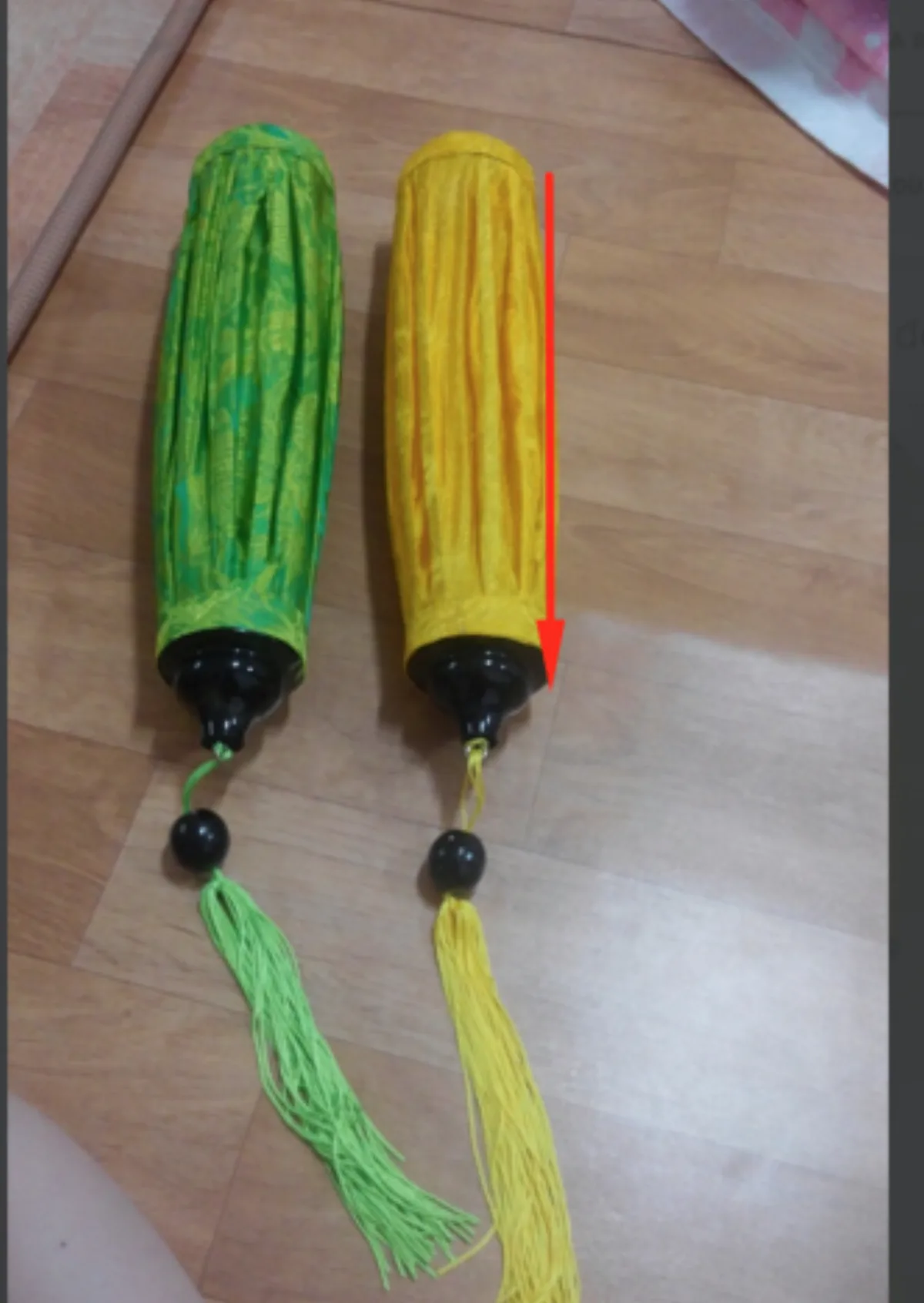
A lantern arrives folded flat, roughly the size of a dinner plate, and most people who have never handled one hesitate before pulling it open — worried they will tear the silk or bend the bamboo the wrong way.
You will not. The frame is built to open and close hundreds of times. What actually damages a lantern is not the unfolding — it is the wrong bulb, the wrong hook, or leaving it out in a downpour. Here is how to do all of it correctly.
This guide covers the whole lifecycle of owning one: opening it the first time, choosing where and how high to hang it, mounting it safely whether that is a single ceiling hook or a row of five along a corridor, lighting it without any risk to the silk, and folding it away again when the season or the event is over. Every step below comes from handling these frames daily at the workshop, not from a generic care label.
Under a minute, no tools, and it gets easier the second time.
Before you pull the frame open, it helps to know what you are actually holding. A handmade Hoi An lantern is four parts working together — a hinged top ring, split-bamboo ribs, a stretched silk skin, and a bottom ring that mirrors the top one. None of these parts is delicate in the way a paper lantern is. The bamboo has been aged for years specifically so it can flex thousands of times without splitting, and the silk is stitched to the ribs with enough slack to move as the frame opens and closes.
If a rib will not spring open
This is usually the bamboo being slightly stiff from the folded position it travelled in, not damage. Leave the lantern open and unhung for an hour or two in a dry room and try again — it almost always relaxes into shape on its own.
A lantern that has just arrived from a long flight or a hot delivery van sometimes needs this settling time more than one that has been sitting in a shop. Heat and pressure inside a cargo hold or parcel box can make the folded ribs cling to each other slightly. It is not a fault — give it the hour, and it opens exactly the same as one that has never travelled.
A lantern reads differently depending on the ceiling height and the room around it — worth five minutes of thought before the hook goes in.
The most common mistake is not in the hanging technique at all — it is choosing a size that gets lost in a big room or overwhelms a small one. A 20 cm lantern on a study shelf reads as a warm accent. The same 20 cm lantern alone in the middle of a five-metre-high restaurant ceiling disappears. Scale the lantern to the space before you decide how to mount it.
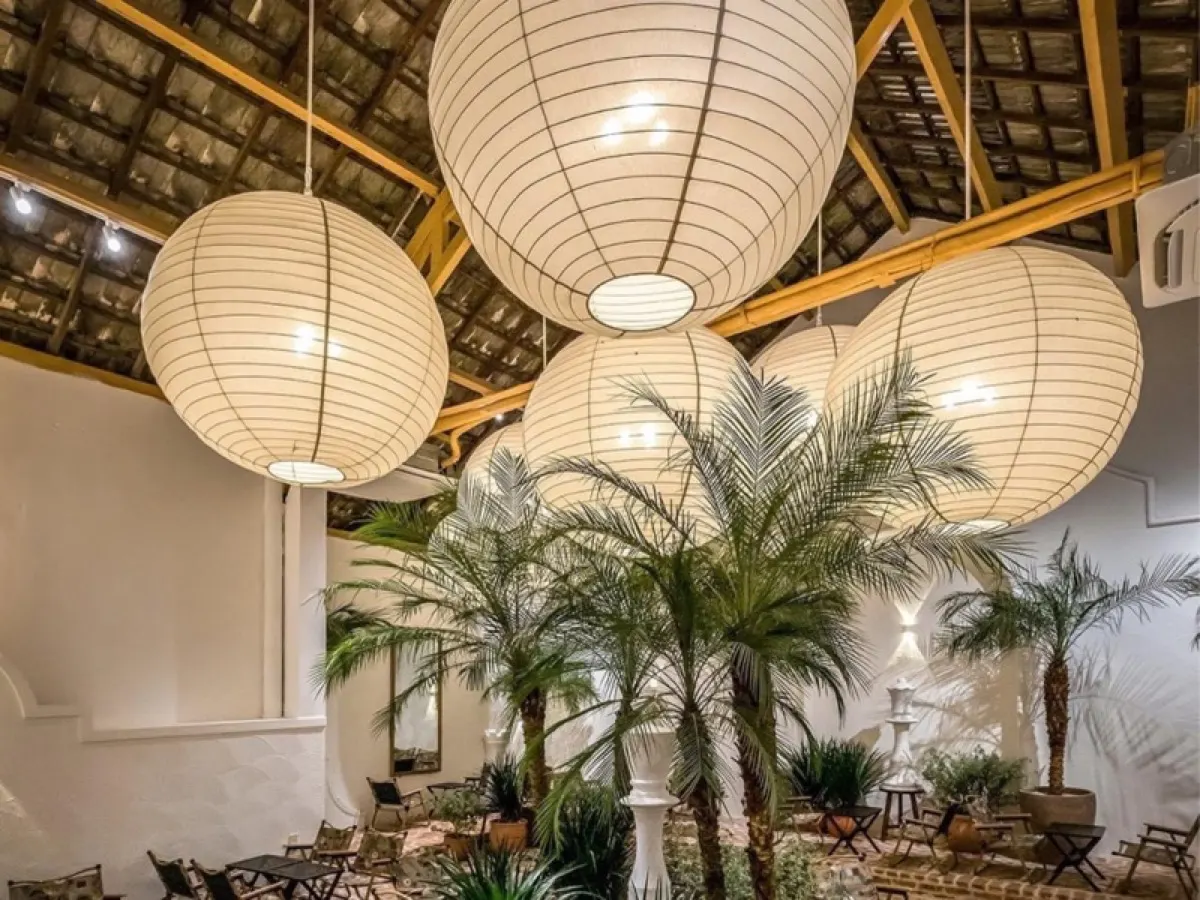
A single 10–20 cm lantern belongs close to eye level — a shelf, a bedside table, a hook just inside a doorway where people notice it as they pass. Move up to 30–40 cm and you have a piece that reads well from across a room: a balcony rail, above a dining table, in a bay window. From 45 cm and up, the lantern becomes an architectural feature rather than a decorative object, and it wants a genuinely open space — a double-height lobby, a covered terrace, the centre of a function room — where nothing crowds it from the sides.
Ceiling height matters just as much as floor space. As a rough guide, leave at least 40 cm of clearance above head height for the lantern itself, plus whatever drop the hook or cord adds. In a standard 2.4–2.6 m residential ceiling, a 30–40 cm lantern hung on a short cord still clears a tall adult comfortably. In a shop or restaurant with a 3.5 m-plus ceiling, you have room to drop the lantern lower and let it become part of the eye-level scene rather than something people only glance up at.
The goal is to support the top ring evenly — never pull on the silk itself.
Every lantern hangs from its top ring, not from the fabric. A ceiling hook, a horizontal pole or beam, or a length of string looped through the ring all work — what matters is that the weight rests on the bamboo ring and metal fitting, never on the silk.
Never pull the silk taut
Do not stretch or tie anything to the fabric panels to keep the lantern from swinging — silk that is pulled tight loses its natural drape and can tear at the seam over time. Let it hang and move freely from the top ring.
A cup hook rated for a couple of kilograms is more than enough for even the largest single lantern — a full 60–80 cm piece with its bulb and fitting still weighs under a kilogram, far less once folded weight is taken as a rough guide (see the shipping and packing guide for exact folded weights by size). The strain on a ceiling fixing is closer to hanging a framed picture than mounting a light fitting.
If you are hanging into plasterboard or drywall rather than a joist or solid beam, a small self-drilling plasterboard anchor holds a lantern's weight without issue — you do not need a heavy-duty toggle bolt meant for shelving. Into brick, render or concrete, a plastic wall plug and screw is standard. The one thing to avoid is double-sided tape or an adhesive hook as the sole support: they hold for a while, then let go without warning, usually onto whatever is directly underneath.
Groups read very differently from a single piece — spacing and height do most of the work.
One lantern is a decoration. Three or more, hung with intention, become a scene — the effect most people picture when they think of a Hoi An street at night. The trick is almost never the lanterns themselves; it is the spacing and the variation in drop height between them.
A cluster of three at slightly uneven heights reads as deliberate and relaxed in a way that three lanterns at exactly the same height rarely does — the human eye reads a small stagger as natural rather than rigid. Odd numbers generally look more comfortable than even ones for small clusters; three or five rather than two or four.
A row along a corridor, bar counter or covered walkway works best when the spacing between lanterns is roughly one to one and a half times the lantern diameter — close enough to read as a continuous line, far enough apart that each lantern keeps its own shape rather than blurring into the next. For a cascade down a stairwell or through a double-height space, increase the drop by roughly the same increment each step down, so the sequence feels measured rather than random.
Wiring for a group
If every lantern in a row or cluster needs power, run a single length of cord or a rated outdoor extension along the mounting line first, then add a plug-in bulb socket at each lantern position, rather than trailing separate cords to a wall outlet from each piece. It is tidier and considerably safer.
Cool LED light only — never an open flame or a hot incandescent bulb inside silk.
A silk lantern is a fabric shade around a bamboo frame, not a fireproof fixture. A cool-running LED bulb is the only sensible choice inside it — LEDs generate very little heat at the bulb surface, which keeps both the silk and the bamboo well away from any risk of scorching.
An old-style incandescent bulb runs hot enough at the glass surface to scorch silk or bamboo over time if it sits close to the fabric, which is exactly the risk with a lantern's tight interior. Skip it in favour of LED.
For colour temperature, a warm white LED — roughly the 2700–3000 K range sold for living rooms and restaurants — brings out the natural glow of dyed silk far better than a cool daylight-white bulb, which tends to flatten warm colours like red and amber. A single warm bulb centred inside the frame gives an even, all-round glow; a short LED fairy-light string coiled loosely inside does the same job with a slightly more textured, twinkling effect, which many people prefer for a cluster of several lanterns rather than one alone.
Wattage is not really a consideration with LED — even a bright LED equivalent to a 60W incandescent bulb runs cool enough to touch comfortably after an hour lit. What matters more is fitting: use a bulb holder that clips or screws to the bottom ring rather than one that dangles loose against the silk, so the bulb stays centred and does not brush the fabric as the lantern moves in a breeze.
A dimmable LED bulb and a compatible dimmer switch work perfectly inside a silk lantern and are worth the small extra cost for a dining room or bedroom, where a lantern often needs to move between a bright, functional light and a softer evening glow. Smart bulbs controlled by an app or a voice assistant also work, since they run on the same low-heat LED technology — the electronics inside are no different to lighting any other fabric shade in the house.
No candles, ever
Never put a candle or any open flame inside a fabric lantern. This is a genuine fire-safety point, not a style preference — silk and bamboo are both combustible, and a lantern is not designed or ventilated to contain a flame safely.
Silk is not weatherproof — direct rain and harsh sun both shorten its life.
Indoors, a lantern needs no special protection at all. Outdoors, it can absolutely still work — under a covered porch, a veranda roof, or a garden pergola with an overhang — but it should not hang where rain lands directly on it or where midday sun bakes the same panel for hours every day.
Direct rain soaks into silk and can leave water marks or weaken the fabric over repeated soakings. Strong, sustained sun fades the dye unevenly over weeks and months. A shaded eave, awning or covered walkway gives you the outdoor look without either problem.
If the spot you have in mind genuinely gets rained on — an open terrace, a garden without a canopy, an entrance with no roofline over it — ask about our outdoor range when you order rather than trying to weatherproof a standard silk lantern after the fact. The outdoor version uses an iron powder-coated frame and a tighter-weave fabric built for humidity and occasional light rain; a standard silk lantern was never designed to take that load, no matter how it is sealed or coated afterward.
Short answer: no fabric lantern is waterproof — the two materials we use just handle humidity differently.
No, and it is worth being direct about this rather than vague: a Hoi An lantern is fabric stretched taut over a bamboo frame, not a sealed or coated waterproof shell. It sheds a light spray of mist the way any tightly woven fabric does, but it is not built to sit under open sky through a rain shower. That is true of the standard silk range and the standard polyester range alike — the difference between them is how each one copes with humidity and occasional dampness, not whether either one is waterproof.
If your climate runs humid for months at a time — a lot of Southeast Asia, most of the year — glossy polyester is the more relaxed material to live with day to day, and it is what we would point you toward for a covered balcony, an open-sided café terrace, or anywhere the air stays damp even when it is not actually raining. Mulberry silk still belongs in that same covered spot; it just rewards a slightly drier setting and a bit more care, which is exactly why it stays the traditional, premium option rather than the practical one.
A spot that genuinely has no cover at all
If where you want to hang it gets rained on directly — an open terrace, a garden with no canopy, an entrance with no roofline overhead — neither standard material is the right fit, silk or polyester. Ask us about the outdoor range when you order: it uses an iron powder-coated frame and a tighter-weave fabric built for that kind of exposure, rather than trying to weatherproof a standard lantern after the fact.
Light dusting while it hangs; fold flat and store dry when you take it down.
A lantern that comes down for the season — after a festival display, a wedding, or simply at the end of an outdoor summer — deserves the same care going into storage as it got coming out of the box. Fold it flat, slip it back into its original bag if you kept it, and add a small silica gel sachet if you have one, the kind that comes packed with shoes or electronics. This keeps the folded silk dry through humid months in storage without you having to check on it.
Store it flat or upright rather than on its side. A lantern left folded on its edge for months, especially under other stored items, can develop a long-term bend in the rim that does not spring back the way a short-term fold does. Flat in a drawer, a box, or standing upright in a cupboard corner all work fine.
Two issues come up more than any others — both are easy to correct.
This usually happens if the lantern was opened unevenly. With the lantern hanging, gently press the misaligned rib inward or outward by hand until it matches the curve of the ones beside it. Bamboo has enough give to be nudged back into position without cracking.
A small amount of give in the fabric between ribs is normal and part of how the shape drapes. If it looks unusually loose, check that the top and bottom rings are pulled to their full open position — silk that looks saggy is often just a lantern that has not been opened all the way.
This is almost always warm air rising from the bulb, not a fault with the hanging point. Heat from an enclosed LED bulb creates a faint updraft that catches the silk panels and turns the lantern gently — the same physics behind a kéo quân revolving lantern, just on a much smaller scale. It is harmless and stops as soon as the light is off. If the spin bothers you, switch to an LED fairy-light string instead of a single enclosed bulb; it produces less concentrated heat and the movement mostly disappears.
This means the lantern was folded away slightly damp, or stored somewhere humid without a desiccant. It is not permanent. Open the lantern fully, hang it somewhere with good airflow — not direct sun — for a day, and the smell almost always clears completely. If it lingers past a couple of days, a very light dab of diluted white vinegar on a cloth over the affected patch, followed by thorough air-drying, resolves the rest.
Handmade bamboo-and-silk lanterns from our Ho Chi Minh City workshop, folded flat for shipping and ready to open in under a minute.


How do you open a Vietnamese silk lantern?
Hold the top and bottom rings, one in each hand, and gently pull them apart so the bamboo ribs spring outward — the same motion as opening a concertina paper shade. It takes under a minute and needs no tools.
What light bulb goes in a silk lantern?
A cool-running LED bulb. LEDs generate very little heat at the surface, which keeps the silk and bamboo safe. An old-style incandescent bulb runs hot enough to scorch fabric over time and should be avoided.
Can silk lanterns go outside?
Yes, under cover — a porch roof, veranda or pergola with an overhang works well. Avoid spots where direct rain lands on the fabric or where harsh midday sun hits the same panel for hours every day, since both shorten the silk's life.
Is a Vietnamese lantern waterproof?
No. A standard lantern, silk or polyester, is fabric stretched over a bamboo frame, not a sealed waterproof material — it belongs indoors or under real cover, never in direct rain. For a spot that genuinely has no cover at all, ask about our outdoor range, which uses an iron powder-coated frame and a tighter-weave fabric built for that kind of exposure.
Which handles humidity better, silk or polyester?
Glossy polyester is more forgiving outdoors and in humid air than Mulberry silk. Silk is the traditional, premium choice — deeper colour, a slight natural sheen — but it prefers a drier, more sheltered spot. Neither one is waterproof; both still need real cover from direct rain.
What if my lantern gets rained on?
Bring it inside and let it dry fully somewhere with good airflow, out of direct sun, before folding it flat again. Packing it away while it is still damp is what causes a musty smell or mildew — not a single light soaking.
How do you clean a silk lantern?
Dust it gently with a soft dry cloth or feather duster while it hangs. For a light mark, wipe carefully with a barely damp cloth — avoid soaking the silk or scrubbing it.
Can I put a candle inside?
No. Never put a candle or any open flame inside a fabric lantern — silk and bamboo are both combustible, and the lantern is not built or ventilated to contain a flame safely. Use a cool LED bulb instead.
What size lantern should I hang, and how high?
Scale the lantern to the room. A 10–20 cm lantern works close to eye level, on a shelf or just inside a doorway. A 30–40 cm piece reads well from across a room — a balcony rail, above a dining table. From 45 cm up, it becomes a feature piece and wants an open space with real height around it, such as a lobby or covered terrace, plus at least 40 cm of clearance above head height.
How do you hang several lanterns together?
Vary the drop height slightly rather than hanging them all level — a small stagger reads as deliberate rather than random. Odd numbers (three or five) generally look more comfortable than even ones for a small cluster, and for a row along a corridor or bar, space each lantern roughly one to one-and-a-half diameters apart.
Continue reading
Message us on WhatsApp with a photo if a rib or fitting looks off — we can usually tell you exactly what to do in a couple of minutes.
Visit our showroom
262/1/93 Phan Anh, Phu Thanh Ward, Tan Phu District, Ho Chi Minh City
Air-conditioned, one-on-one help, English spoken. Open daily 8 a.m.–9 p.m.